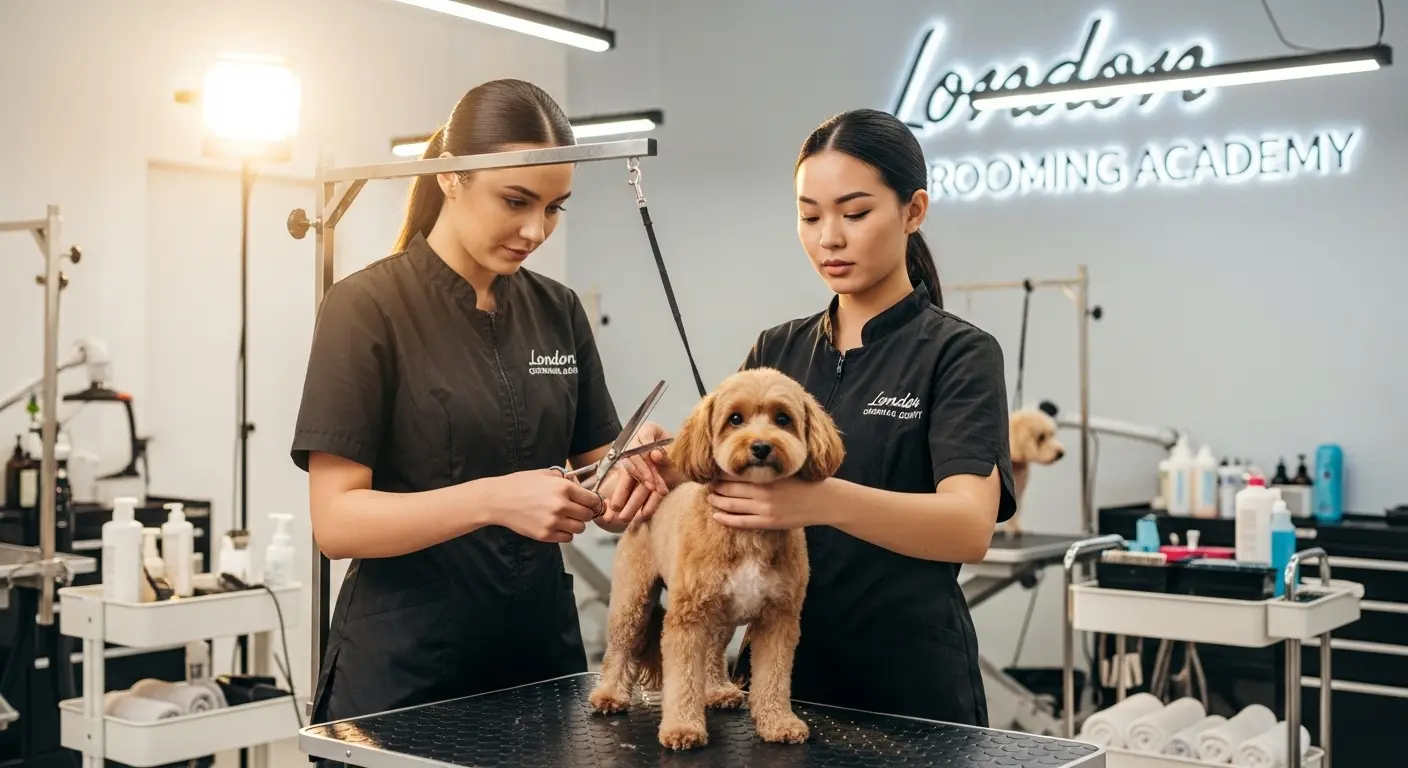
Dog Grooming Courses Near Folkestone
Quick answer: If you are looking for dog grooming courses in Folkestone, the realistic route is usually to compare nearby Kent training providers rather than expect a big in-town training hub. For most beginners, the right starting point is a course with substantial hands-on dog handling, a clear progression into professional-level grooming, and a schedule you can actually sustain around travel, work and budget. If your goal is to work locally afterwards, use the live directory and pricing pages before you commit so you understand the Folkestone market you would be stepping into.
One local reality check
If your plan is to qualify and then work in or around Folkestone, study the local market first. Browse current listings in Folkestone, compare nearby areas through the locations hub, and use the Kent price guide to see what local owners are already paying for grooming services.
Which type of dog grooming course should you compare?
Not every course does the same job. Some are built for complete beginners, some are designed to get you ready for independent grooming, and some are really short private programmes that only make sense if you already know the basics or have a place to practice afterwards.
| Course route | Best for | Main trade-off |
|---|---|---|
| Beginner assistant-level course | People starting from zero who need safe handling, bathing, drying and preparation basics | Usually not enough on its own if your goal is to groom independently |
| Professional diploma-level route | People aiming to work as a groomer or build a client list of their own | Longer, more expensive and harder to fit around full-time work |
| Private academy intensive | People who want a faster route with concentrated practical days | You need to inspect the amount of real supervised grooming very carefully |
| Part-time college-style training | People balancing training with other work and willing to travel weekly | Slower pace and a longer runway before you earn from the skills |
For most people searching this term locally, the real decision is simple: do you want a lower-risk entry route, or do you want a serious path toward working professionally? Once you know that, the provider shortlist gets much easier.
What makes a course worth paying for?
Course brochures tend to talk about passion, confidence and business freedom. The practical questions are better.
1. Real hands-on dog time
The key question is not how polished the prospectus looks. It is how much supervised practical work you will actually do on real dogs with different coat types and behaviour profiles.
2. A clear progression route
If the first course only gets you to assistant-level work, that is fine, but the provider should be clear about what comes next if you want to groom professionally rather than stop at bathing and prep work.
3. Travel and attendance that are realistic
A course is not a good buy if the drive from Folkestone makes you miss sessions or rush through practical days. The best training plan is one you can finish consistently, not the most ambitious option on paper.
4. Honest business expectations
Good training providers should be candid about setup costs, insurance, equipment, model dogs, and how long it takes to build a book of regular clients in the real world.
Questions to ask before you pay a deposit
- How many supervised practical hours are included, not just classroom or theory time?
- Will you work on a range of coat types, including curly, double and hand-strip candidates?
- What qualification or completion standard does the course actually lead to?
- What extra costs sit outside the headline fee, including tools, model dogs, exams or first aid?
- What support exists after the course if you want to move into employed salon work or self-employment?
- Can the provider explain honestly who the course is not suitable for?
That last question matters because the wrong training path is usually obvious in hindsight: too little dog handling, too much vague business talk, and not enough clarity on what you will actually be able to do at the end.
How far should you travel from Folkestone for training?
Most learners should assume they may need to travel outside Folkestone for formal training. That is not automatically a problem. It just means you should choose based on repeatable travel time, not one optimistic test journey in light traffic.
Practical rule: if the drive makes you likely to skip practice days, arrive stressed or abandon the course halfway through, it is too far no matter how attractive the qualification looks.
- Short, intensive formats can work if the travel burden is temporary and concentrated.
- Part-time weekly training makes route reliability more important than brochure prestige.
- If your goal is to work locally afterwards, it can be smarter to choose a slightly less flashy course that leaves you more budget for tools, insurance and setup.
Training is only half the decision
Finishing a course is not the same as building a viable local business. If you want to work around Folkestone, you also need to understand what clients already buy, what nearby groomers charge, and how you would differentiate yourself.
| If your plan is | Use this page next |
|---|---|
| Work for an existing local salon | Browse Folkestone groomers to see the businesses already serving the area |
| Set prices or judge your earning potential | Use the Kent price guide for local reference points |
| Launch or update your own listing once you are trading | Submit your business details for review |
Red flags when comparing dog grooming courses
- Too much lifestyle marketing: lots of business-freedom talk, very little detail on handling and practical assessment.
- Vague practical content: no clear answer on how much dog work you actually do.
- Hidden add-on costs: tools, exams or model-dog requirements only appearing after you enquire.
- No honest progression guidance: the course is sold as a full solution even if it only gets you halfway there.
- Travel assumptions that do not fit your life: a course cannot be “convenient enough” in theory only.
Final view
The best dog grooming course near Folkestone is not automatically the closest or the fastest. It is the one that gives you enough supervised practical work, a believable progression path, and a schedule you can finish without wrecking your budget or routine.
If you are comparing options now, start by deciding whether you need a beginner entry route or a serious professional track. Then test every provider against the same standard: dog handling, practical time, total cost and what happens after the certificate or diploma is finished.
Planning to work locally once you qualify?
Use the live site to understand local demand before you pay for training or launch a business.
Move from research into real local options
Use the directory to compare live grooming listings, or check the Kent price guide first if you want a quick cost sense-check before contacting a business.