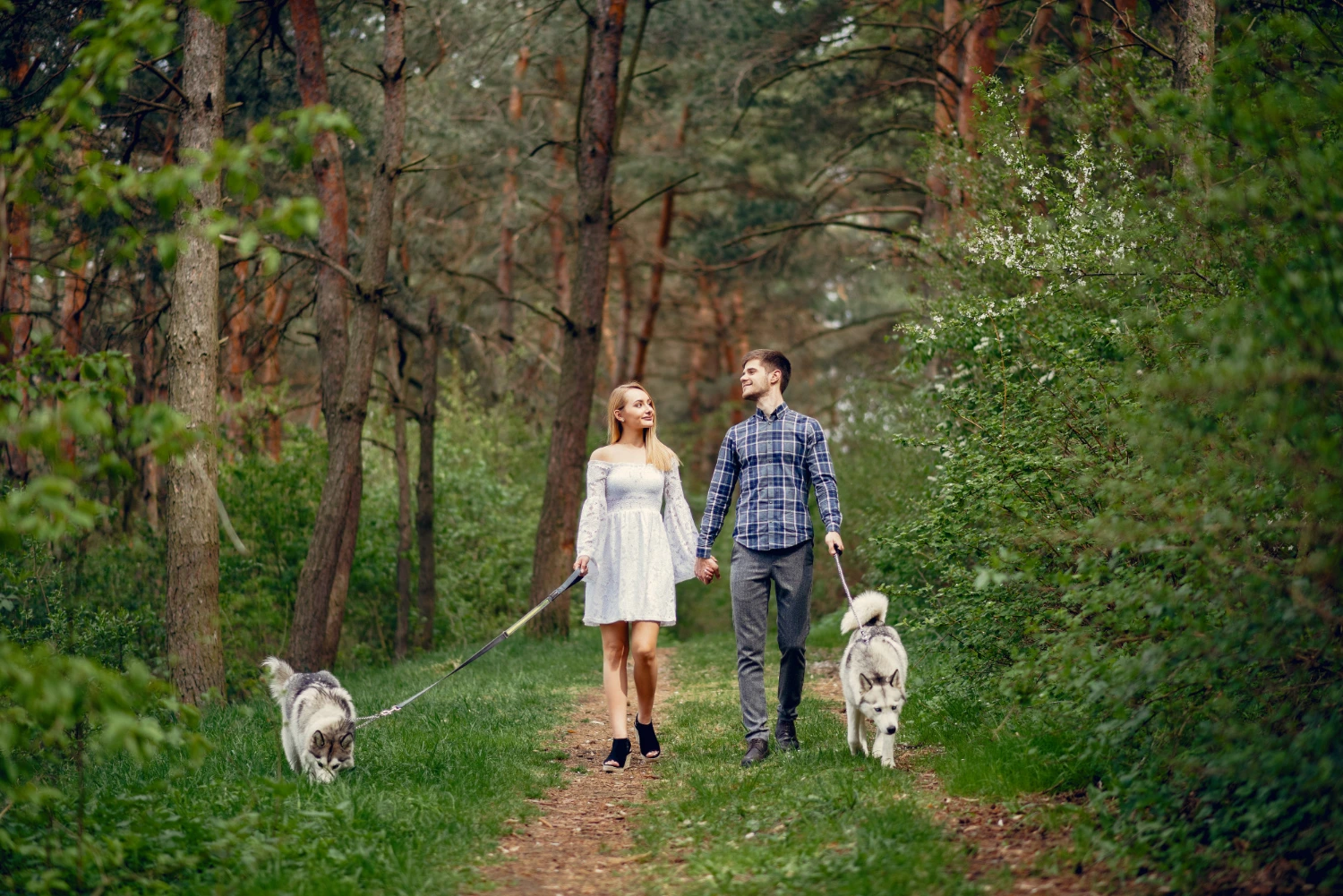
Romney Marsh is unlike anywhere else in Kent. Roughly 100 square miles of flat, low-lying wetland stretching from Hythe to Rye, parts of it sitting below sea level, crossed by a dense network of drainage ditches and grazed by sheep whose bloodline goes back over 700 years.1 It is wide-open, wind-swept, and genuinely quiet — and for dogs that love space and freedom, it is some of the best walking in Kent.
This guide covers the best routes on the Marsh for dog owners, what to expect from the terrain and weather, where dogs can and cannot go off-lead, and the practical details — parking, signal, livestock — that matter when you are actually out there. For the full picture of dog walking across Kent, see our complete guide to dog walks in Kent.
Important: Livestock law changed on 18 March 2026
The Dogs (Protection of Livestock) (Amendment) Act 2025 came into force on 18 March 2026. Fines for livestock worrying are now unlimited (previously capped at £1,000), and the definition of livestock worrying has been broadened to include chasing and being at large among livestock without control.2 On a marsh where sheep are almost always within sight, this law is directly relevant to every walk. Read our complete Kent dog safety guide for the full details.
Jump to a section
What Makes Romney Marsh Special for Dog Walking
Romney Marsh has been called "the fifth quarter of the world," a phrase from the Ingoldsby Legends that stuck because the Marsh really does feel like a separate place.3 It is flat — almost entirely flat — and the air is different. The sky dominates. On a clear day you can see for miles. On a grey day it feels like the edge of the world.
For dogs, this landscape offers something rare: uninterrupted space. The paths are wide and open, the terrain is soft underfoot (grass and earth, not chalk or gravel), and there are very few people outside of the coastal towns. If your dog needs room to move — a sighthound, a working breed, any dog that comes alive with space around it — Romney Marsh delivers.
The Marsh also has features you will not find elsewhere in Kent:
- Drainage ditches: The Marsh is crossed by a dense network of ditches locally called "sewers" (not sewage — the word comes from the Old French for a channel that carries water).1 These ditches are often hidden by long grass and can be deep. Keep your dog under control near field edges, and be aware that some ditches are water-filled year-round.
- Dungeness: The southern tip of the Marsh ends at Dungeness, one of the largest shingle expanses in Europe and a National Nature Reserve.4 The shingle desert landscape is extraordinary — unlike anything else in the south-east — but it is also an important nesting site for birds, with access restrictions for dogs in some areas.
- The Royal Military Canal: Built between 1804 and 1809 as a defence against Napoleonic invasion, this 28-mile canal runs along the northern edge of the Marsh from Seabrook (Hythe) to Cliff End (near Hastings).5 The canal towpath is one of the best flat walks in Kent.
- Sheep — everywhere: Romney Marsh is sheep country. The Romney breed has been grazed here for over 700 years, with a flock book maintained since 1895.6 You will encounter sheep on almost every walk on the Marsh, and this shapes everything about how you walk your dog here.
Best Routes on Romney Marsh for Dogs
1. Romney Warren Country Park
| Type | Circular walks through the country park |
| Difficulty | Easy — flat with good paths |
| Location | Dymchurch Road, New Romney, TN28 8AY |
| Parking | Free car park at the park entrance on Dymchurch Road |
| Livestock | No — the country park is fenced from surrounding farmland |
Romney Warren Country Park is a Local Nature Reserve on the coast between Dymchurch and New Romney. It is a mix of sand dunes, scrub, grassland and woodland — a surprisingly varied landscape for such a flat area.7
This is arguably the best all-round dog walking spot on the Marsh. The park is bounded and relatively contained (no risk of your dog vanishing into open farmland), the paths are well-maintained, and the coastal position means a breeze even in summer. There is direct access to the beach from the park.
The park is managed locally and has no entrance fee. The car park is free. There is no café or visitor centre at the park itself.
2. Royal Military Canal Path
| Distance | 28 miles total; walk sections of any length |
| Difficulty | Easy — flat towpath throughout |
| Best sections | Hythe (Seabrook) to West Hythe (~3 miles); Appledore area (~2 miles) |
| Parking | Various points — see car parks section below |
| Livestock | Sheep graze in fields adjacent to the canal path — keep your dog under control |
The Royal Military Canal was built between 1804 and 1809 as a third line of defence against Napoleonic invasion, after the Martello towers and coastal forts. It runs 28 miles along the inland edge of Romney Marsh, from Seabrook near Hythe to Cliff End near Hastings, and is a Scheduled Ancient Monument.5
For dog walking, the canal towpath is ideal: flat, wide, well-surfaced in most sections, and with water alongside (most dogs love this). The Hythe to West Hythe section (approximately 3 miles) is the most popular and best maintained. It follows the canal through the town and out into open countryside, with views south across the Marsh.
Further west, the Appledore section is quieter and more remote, passing through some of the most isolated parts of the Marsh. The canal takes a distinctive zig-zag course (designed so defenders could fire along the canal in enfilade) which makes the walk feel varied despite the flat terrain.
Water safety: The canal is deep in places, with steep banks. If your dog is a swimmer, keep them under control near the canal edge — the banks can make it difficult for dogs to climb out once in the water.
3. Dymchurch to St Mary's Bay
| Distance | Approximately 3 miles (4.8 km) linear along the sea wall |
| Difficulty | Easy — flat sea wall path |
| Start | Dymchurch sea wall (TN29 0NE) |
| Finish | St Mary's Bay (TN29 0TF) |
| Parking | Pay-and-display car parks in Dymchurch; free street parking in St Mary's Bay |
| Livestock | No livestock on the sea wall or beach |
The Dymchurch sea wall runs along the coast for several miles, separating the low-lying Marsh from the English Channel. The path along the top of the wall is flat, wide, and gives you sea views on one side and Marsh views on the other.
This is a good walk for dogs that enjoy the coast but struggle with cliffs or steep terrain. The beach is accessible from steps along the sea wall. Dymchurch beach has seasonal dog restrictions (typically 1 May to 30 September on the main beach), so check the current rules before letting your dog onto the sand in summer — Folkestone & Hythe District Council publishes these annually.8
You can also see the Martello towers along this stretch — a chain of small defensive forts built between 1805 and 1808 to resist Napoleonic invasion. Dymchurch has one of the best preserved, which is managed by English Heritage.9
The walk is linear — either walk and return, or catch the Romney, Hythe & Dymchurch Railway between stations. The miniature railway (15-inch gauge, running 13.75 miles from Hythe to Dungeness since 1927) allows dogs — small and medium dogs are welcome on board.10
4. Dungeness
| Type | Open walking on shingle and beach (no set paths) |
| Difficulty | Easy to moderate — shingle walking is slow and tiring underfoot |
| Location | Dungeness, Lydd, TN29 9NB (near the lighthouses) |
| Parking | Car park near the lighthouses; additional parking at Greatstone |
| Livestock | No livestock — but important bird nesting restrictions (see below) |
Dungeness is a headland at the southern tip of Romney Marsh, and it is one of the most unusual landscapes in Britain: a vast expanse of shingle ridges with scattered low vegetation, old fishing boats, two lighthouses, and an otherworldly atmosphere. It is designated as a National Nature Reserve, a Special Protection Area, and a Site of Special Scientific Interest.4
RSPB Dungeness: Dogs Not Permitted on Reserve Trails
Dogs are not permitted on the RSPB Dungeness reserve's Discovery Trail, Main Trail, or the Hanson ARC Trail. This is to protect ground-nesting birds including terns, gulls and waders. If you are visiting with a dog, use the public bridleways and footpaths around the estate, or walk on the beach. You can park at the ARC car park and access the beach from there.11
Outside the RSPB reserve, dogs are welcome on the shingle and beach. Walking on shingle is tiring for both you and your dog — it shifts underfoot and progress is slow. Shorter walks work better here. The Greatstone to Dungeness beach walk follows the shoreline for roughly 2 miles and avoids the RSPB restricted areas.
Dungeness is also home to the acoustic sound mirrors at Greatstone — large concrete structures built between 1928 and 1930 as an early warning system to detect incoming aircraft before radar was developed.12 You can see them from the beach path.
Are Dogs Allowed Off-Lead on Romney Marsh?
This depends entirely on where you are:
| Location | Off-lead? | Notes |
|---|---|---|
| Romney Warren Country Park | Yes, with care | No livestock; fenced from farmland; good recall needed near wildlife areas |
| Royal Military Canal path | On lead recommended | Sheep in adjacent fields; deep canal banks; other walkers |
| Dymchurch sea wall/beach | Off-lead on beach | Seasonal restrictions on main Dymchurch beach (check annually) |
| Dungeness beach | Yes | Away from RSPB reserve trails; keep away from nesting areas |
| Open farmland/fields | On lead | Sheep grazing almost everywhere; unlimited fines for livestock worrying |
The general rule on Romney Marsh: if you can see sheep, your dog is on a lead. And you can almost always see sheep. The only places where off-lead walking is practical are the beaches, Romney Warren Country Park, and cleared sections of the coastal path. If your dog does not have reliable recall around livestock, walk on the coast or in the country park.
Mobile Signal on Romney Marsh
Mobile Signal on This Route
Signal is patchy across much of Romney Marsh, particularly around Lydd, Old Romney and the lower Marsh away from the coast. The flat terrain means there are no hills to block signal, but there are also fewer masts than in more populated areas. Coastal towns (Dymchurch, New Romney, Greatstone) have better coverage. If your dog is off-lead on the beach or in Romney Warren and you lose sight of them, you cannot rely on your phone always having signal to call for help. Consider a GPS dog tracker that works independently of phone signal — our guide covers the best options for rural Kent use.
Livestock on Romney Marsh: What to Watch Out For
Livestock on This Route
Sheep are present on Romney Marsh year-round. The Romney breed has been grazed here for over 700 years.6 You will encounter sheep on any walk that crosses open farmland, which includes most paths away from the coast. Under the Dogs (Protection of Livestock) (Amendment) Act 2025, in force since 18 March 2026, even chasing livestock from a distance or being "at large" among sheep without reasonable control constitutes an offence with unlimited fines.2 Read the full guide to dog safety in Kent for details.
Romney Marsh sheep are generally calm and used to dogs at a distance, but they will panic if a dog approaches rapidly. Lambing season (typically February to April) is the most sensitive time — fields with ewes and lambs may have additional signage, but they may not. Assume any sheep field may have lambs in spring.
The shepherds who tend the Marsh flocks were historically known as "lookers" — a term that is still used today. In the past, lookers used small shelters called lookers' huts, scattered across the Marsh. A survey in 1870 recorded 356 of them.1 You may see some remaining huts on your walks — they are part of the agricultural heritage of the Marsh.
Drainage ditches and visibility: The flat terrain means you can often see sheep from a long way off, which gives you time to get your dog on a lead. But the drainage ditches can hide sheep from view — a ewe lying in a ditch is invisible until you are almost on top of her. Walk carefully near field edges and ditch lines.
Seasonal Notes: Best Time of Year to Walk Romney Marsh
- Spring (March–May): Lambing season — extra vigilance with dogs near sheep. Ground-nesting birds active at Dungeness (March–July) — stay on marked paths and keep dogs away from nesting sites. The Marsh is green and the drainage ditches are full. Good walking weather, but windy.
- Summer (June–August): The Marsh can be very exposed in summer heat — there is virtually no shade on the open Marsh. Walk early morning or late evening. The coast has a breeze. Seasonal dog restrictions on some beaches (check Folkestone & Hythe District Council annually).8 Ticks are active in long grass — check your dog after every walk. See our Kent dog safety guide for tick prevention advice.
- Autumn (September–November): The best time to walk the Marsh. Cooler temperatures, fewer visitors, no seasonal beach restrictions, and the low autumn light across the flat landscape is beautiful. Migrating birds arrive at Dungeness from September — a spectacular sight even from the beach.
- Winter (December–February): The Marsh is wild in winter. Wind, rain, and short daylight hours. The flat terrain means there is no shelter. The Royal Military Canal path and Romney Warren are the best winter options because they offer some hedgerow and scrub protection. Paths can be muddy (the Marsh drains slowly). Dungeness shingle is walkable year-round.
Nearest Dog Groomers After Your Walk
Nearest Groomer After Your Walk
A Marsh walk often means muddy paws and wet fur. Find a groomer in Folkestone or Hythe for a post-walk clean-up, or check our guide to finding a good groomer in Kent for what to look for when choosing one.
Getting There: Car Parks and Public Transport
| Location | Parking | Postcode | Notes |
|---|---|---|---|
| Romney Warren | Free car park at park entrance | TN28 8AY | On Dymchurch Road between Dymchurch and New Romney |
| Royal Military Canal (Hythe) | Hythe town car parks (pay-and-display) | CT21 5DA | Walk west along the canal from Hythe centre |
| Dymchurch | Pay-and-display car parks near seafront | TN29 0NE | Near sea wall for coastal walk |
| Dungeness (lighthouses) | Car park near the lighthouses | TN29 9NB | End of the road — unmissable |
| Greatstone | Free car park off Coast Drive | TN28 8RN | Good for beach walks towards Dungeness; near sound mirrors |
Public transport: The Romney, Hythe & Dymchurch Railway runs miniature steam and diesel trains on a 15-inch gauge line from Hythe to Dungeness (13.75 miles), with stops at Dymchurch, St Mary's Bay, New Romney, Greatstone and Dungeness. The railway has operated since 1927 and welcomes small and medium dogs on board.10 It is both a practical transport option and a memorable experience.
The Marsh is not served by mainline rail. The nearest mainline station is Folkestone Central (for the western edge of the Marsh via Hythe) or Ashford International (for the northern edge). Stagecoach bus routes serve Hythe, Dymchurch, New Romney and Lydd from Folkestone and Ashford.
Where to Go Next
Related guides
Sources and References
Landscape and History
- Romney Marsh — ~100 sq mi (260 km²) wetland, drainage ditches ("sewers"), lookers' huts (356 recorded in 1870).
Legislation
- Dogs (Protection of Livestock) (Amendment) Act 2025 — In force 18 March 2026. Unlimited fines, broader livestock worrying definition.
Literature and Culture
- "The fifth quarter of the world" — From the Ingoldsby Legends by Richard Harris Barham, reflecting the Marsh's distinctive character.
Nature and Conservation
- Dungeness — National Nature Reserve, Special Protection Area, one of the largest shingle expanses in Europe.
- Royal Military Canal — 28 miles, Seabrook to Cliff End, built 1804–1809, Scheduled Ancient Monument.
- Romney Marsh sheep — Breed grazed on the Marsh for over 700 years, flock book since 1895.
- Romney Warren Country Park — Local Nature Reserve, Dymchurch Road, New Romney, TN28 8AY.
Access and Local Rules
- Dogs on beaches — Folkestone & Hythe District Council — Seasonal dog restrictions on certain beaches published annually.
- Dymchurch Martello Tower — Built 1805–1808 as part of anti-invasion defences, managed by English Heritage.
- Romney, Hythe & Dymchurch Railway — 15-inch gauge, 13.75 miles from Hythe to Dungeness, operating since 1927. Dogs (small/medium) welcome.
- RSPB Dungeness — dogs not permitted on reserve trails — Dogs excluded from Discovery Trail, Main Trail and Hanson ARC Trail; use public footpaths and beach.
- Acoustic sound mirrors at Greatstone — Concrete listening devices built 1928–1930, pre-radar aircraft detection system.
Disclaimer: All facts, distances, access rules and contact details are accurate as cited from the sources above. Access rules, seasonal restrictions and opening times can change — always verify current details via the official links provided before visiting. This guide provides information for Kent dog owners and does not constitute legal advice.
Move from research into real local options
Use the directory to compare live grooming listings, or check the Kent price guide first if you want a quick cost sense-check before contacting a business.