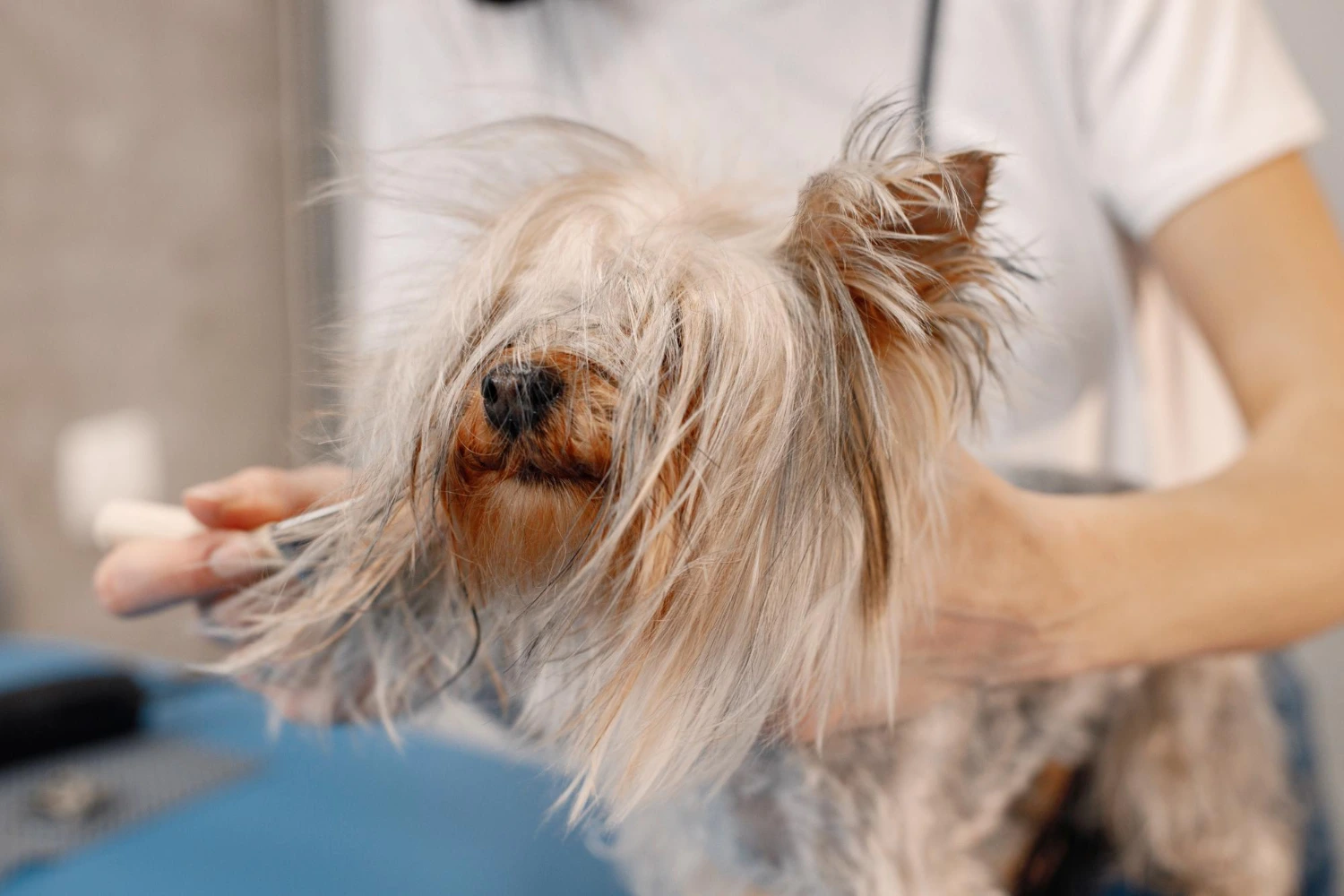
How Often Should You Groom Your Dog?
Quick answer: Most dogs benefit from some form of grooming every week at home, but professional grooming usually falls somewhere between every 4 and 12 weeks depending on coat type. Curly, long-haired and high-maintenance coats need the shortest interval. Short-coated dogs can usually go longer. Double-coated breeds often need de-shedding support rather than frequent clipping. If you want the simplest rule, set the schedule by coat type first and then adjust for age, activity level and how well you keep up between appointments.
The mistake most owners make is asking for one universal number. There is no honest answer to that because a Whippet, a Cockapoo, a Labrador and a hand-stripped terrier do not live on the same grooming timetable.
What matters is not just how often the dog gets washed or clipped. It is how often the coat needs brushing, how quickly mats form, how much the dog sheds, and whether professional handling is doing something you cannot realistically maintain at home.
One useful reality check
If you are mainly asking this question because your dog is getting harder to manage between appointments, the issue may be your maintenance routine rather than the salon interval alone. Use the Kent price guide to sense-check likely costs, then compare local options in Folkestone, Hythe or Dover if you need a groomer who suits your dog better.
Dog grooming frequency at a glance
| Coat type | Professional grooming | Home maintenance | Main risk if you leave it too long |
|---|---|---|---|
| Short coat | Every 8 to 12 weeks if needed | Weekly brushing | Shedding, nails, ear care getting ignored |
| Long coat | Every 4 to 6 weeks | Daily or near-daily brushing | Matting and painful tangles |
| Curly or wavy coat | Every 4 to 6 weeks | Every 2 to 3 days minimum | Fast matting close to the skin |
| Double coat | Every 6 to 8 weeks | Weekly, then more often in shedding season | Undercoat build-up, shedding overload, poor drying |
| Wire coat | Every 6 to 8 weeks, with stripping schedule as needed | 2 to 3 brush-outs weekly | Coat texture loss or an untidy, overgrown jacket |
How often should different coat types be groomed?
Coat type is still the cleanest way to set a schedule. Once you know that, you can adjust around the dog's age, temperament and how much home care you can realistically sustain.
Short-coated dogs
Typical salon interval: every 8 to 12 weeks, sometimes longer.
Dogs such as Labradors, Beagles, Whippets and French Bulldogs usually do not need frequent full grooms, but they still need routine care. That often means brushing loose coat out, trimming nails, checking ears, and washing only when the dog is actually dirty or smelly rather than on a rigid weekly bath cycle.
If you own a Labrador, the problem is usually shedding volume rather than clipping interval. Our Labrador shedding guide is the better next read if hair build-up is what is really driving the question.
Long-haired dogs
Typical salon interval: every 4 to 6 weeks.
This is where owners get punished fast for drifting. Yorkies, Maltese, Shih Tzus, long-coated spaniels and similar dogs can go from manageable to matted surprisingly quickly if brushing slips for even a few days at a time. If the coat is long and you want to keep it that way, the schedule needs to be tighter.
Simple rule: if you want a longer trim, you need a shorter gap between appointments. Owners often want the opposite, but the coat does not care what the budget prefers.
Curly and wavy coats
Typical salon interval: every 4 to 6 weeks, sometimes even tighter for heavy-maintenance doodle coats.
Poodles, Cockapoos, Labradoodles and Bichon-type coats usually need the most discipline between grooms. These coats trap knots close to the skin and can look fluffy on the surface while matting underneath. If you are brushing less than every few days, the safe appointment gap often shrinks.
Double-coated breeds
Typical salon interval: every 6 to 8 weeks, with extra help during shedding seasons.
Golden Retrievers, German Shepherds, Huskies, Border Collies and similar dogs need regular coat management, but not because they should be shaved short. The real value is de-shedding, drying, brushing out the undercoat properly and keeping skin and ears in good order after wet walks and seasonal coat blows.
Important: double-coated dogs often need more grooming attention during spring and autumn, not because the base schedule is wrong, but because shedding temporarily changes the workload.
Wire-coated dogs
Typical salon interval: every 6 to 8 weeks, with a separate hand-stripping rhythm where appropriate.
Terrier-type coats need a more specific conversation because clipping and stripping are not interchangeable if you care about coat texture. If your dog has a proper wire coat, ask the groomer what maintenance method they actually use before treating the schedule like a generic clip-every-few-weeks job.
Puppies, adult dogs and seniors
Age changes the schedule, but mainly because tolerance, handling and comfort change, not because the coat suddenly obeys a different rulebook.
Age-based guide
- Puppies: shorter, calmer introduction appointments matter more than aggressive styling schedules.
- Adult dogs: usually follow the coat-type interval unless behaviour or lifestyle changes the picture.
- Senior dogs: may need more frequent but shorter sessions because nails, hygiene and comfort become more important even if coat growth slows.
If a senior dog is struggling with standing time or handling, a shorter gap between appointments can actually make the groom easier because each visit asks less of the dog.
When should you book sooner than normal?
- The coat is starting to knot in friction areas such as armpits, ears, tail or collar line.
- Nails are clicking on hard floors or affecting movement.
- The dog keeps coming home soaked or muddy and never dries well around the coat base.
- You are brushing less than the coat type actually requires.
- The current groomer interval only works when you are being unrealistically perfect at home.
Home care vs professional grooming
Home care extends the schedule. It does not erase it. Owners sometimes ask how often a dog should be groomed when the real question is how often they themselves should brush, wash or dry the coat properly between appointments.
| If you do this well at home | You may be able to |
|---|---|
| Keep brushing consistent and thorough | Stretch some coat types toward the longer end of the normal salon range |
| Dry wet coats properly after walks or baths | Reduce undercoat issues, smell and low-grade skin trouble from trapped moisture |
| Stay on top of ears, paws and nails | Prevent appointments turning into backlog-clearance sessions |
If you cannot honestly keep up with that, there is no shame in tightening the grooming interval. It is usually kinder than letting the coat drift and then asking a groomer to solve several weeks of neglect in one go.
How to choose the right interval for your dog
- Start with the coat-type range above.
- Shorten it if the dog mats quickly, struggles with hygiene, or you are not managing the coat well at home.
- Lengthen it only if the coat type genuinely allows it and you are doing the maintenance properly between visits.
- Sense-check the cost against the price guide so the plan is realistic enough to maintain.
- If you are unsure, compare a few local groomers and ask directly how often they would want to see your dog's coat type.
That last step matters because a good groomer will usually give you a more useful answer after seeing the coat condition, handling needs and owner routine than any generic internet chart can give on its own.
Final call
Most dogs do not need the same grooming interval all year round, and they definitely do not all need the same interval as each other. The honest answer starts with coat type, then gets adjusted by age, lifestyle and how disciplined the home routine really is.
If you want the shortest working version, think 4 to 6 weeks for curly and long coats, 6 to 8 weeks for many double coats, and 8 to 12 weeks for straightforward short coats that are being looked after properly at home.
Need help turning that into a real booking plan?
Use the live site to compare likely cost, choose a better local groomer and avoid drifting into an unrealistic routine.
Move from research into real local options
Use the directory to compare live grooming listings, or check the Kent price guide first if you want a quick cost sense-check before contacting a business.